Note before hand:
Note beforehand:
Hi, I'm Ryan. I run VAS Enterprise out of Brisbane Australia and I've spent the last few years rebuilding Shopify stores for clothing and jewellery brands, mostly ones doing $20K to $80K a month with great content and a site that's was (previously) costing them a third of what they could be making.
I keep getting on calls with founders who say the same things.
"Our content is doing alright, we even had a video popped up recently but our sites conversion is dog shit!"
"We had a great month on our reels but the orders haven't been the same."
Same five problems every time. So I'm just going to brain-dump everything I've learned into this thing so you don't have to pay me to tell you in person.
Sorry in advance for the run-on sentences and the times I curse (as you can see), I'm a CRO guy not a writer.
Hi, I'm Ryan. I run VAS Enterprise out of Brisbane Australia and I've spent the last few years rebuilding Shopify stores for clothing and jewellery brands, mostly ones doing $20K to $80K a month with great content and a site that's was (previously) costing them a third of what they could be making.
I keep getting on calls with founders who say the same things.
"Our content is doing alright, we even had a video popped up recently but our sites conversion is dog shit!"
"We had a great month on our reels but the orders haven't been the same."
Same five problems every time. So I'm just going to brain-dump everything I've learned into this thing so you don't have to pay me to tell you in person.
Sorry in advance for the run-on sentences and the times I curse (as you can see), I'm a CRO guy not a writer.
This is not a rulebook
This is not a rulebook
Before I start I want to be clear about something. Nothing in here is a rule. Every store is different and what works on a $30K/month jewellery brand might be wildly wrong for a $70K/month streetwear label.
So please read this with a grain of salt. I'm going to share what I've seen work across a lot of stores but you've got to apply your own brain to your own situation. I just want this to inspire you to ask better questions about your own store.
Why I'm writing this
Why I'm writing this
I could write a thing for fashion brands and a thing for jewellery brands and a thing for accessories brands but honestly that'd be dumb. The principles are the same. A site that converts is a site that converts. The differences are in the details and you'll figure those out once you see what's actually going on.
So this whole thing is going to be about your store as a system, speed, product pages, cart, checkout, post-purchase, email flows and so on because I want everyone reading to read the whole thing. The founders I've worked with who get the most lift are the ones who understand why something works, not just that it does. Because then when something breaks (and it will) they can fix it themselves.
What's the actual goal here
What's the actual goal here
The goal of your store is to make money. That sounds obvious but I genuinely cannot tell you how many founders I get on calls with who've forgotten that. The goal is not to look good on Instagram. Not to win a design award. Not to have the cleanest theme on the internet. Not to have the same fonts as Aimé Leon Dore. It's to make money. (Although the rest help and are really nice to have)
Everything else flows from that. Your branding should be good but in service of making money. Your photography should be beautiful but in service of making money. Your site should feel premium but in service of making money. The second any of that stuff stops serving the goal, kill it. I've watched founders kill their conversion rate by chasing an aesthetic that their actual customer doesn't care about. Don't do that.
The goal of your store is to make money. That sounds obvious but I genuinely cannot tell you how many founders I get on calls with who've forgotten that. The goal is not to look good on Instagram. Not to win a design award. Not to have the cleanest theme on the internet. Not to have the same fonts as Aimé Leon Dore. It's to make money. (Although the rest help and are really nice to have)
Everything else flows from that. Your branding should be good but in service of making money. Your photography should be beautiful but in service of converting customers. Your site should feel premium but in service of making money. The second any of that stuff stops serving the goal, rethink it. I've watched founders kill their conversion rate by chasing an aesthetic that their actual customer doesn't care about. Don't do that.
I don't care how Squarespace agencies do things
I don't care how Squarespace agencies do things
Pardon the bluntness but if you came here to be told that your site looks great and you just need to "drive more traffic," you're in the wrong page. Your traffic is most likely fine. Since if our reels are doing the job, the problem is what happens in the 90 seconds after someone lands on your site. That's the whole game.
97% of the agencies that pitch you are going to tell you that you need a rebrand, a re-platform, or more ad spend. Almost none of that is true. What you need is for someone to honestly look at your site and tell you which of the eight or nine things that are broken is the one costing you the most money this month. Then fix that one. Then the next one. That's it. That's the whole job.
Chapter 1: What actually makes a Shopify store convert
Chapter 1: What actually makes a Shopify store convert
I spent basically three years of my life rebuilding Shopify stores for fashion and jewellery brands. Some weeks I'd spend hours doing nothing but watching session recordings of real customers trying to buy things, just to figure out where they were getting stuck. Testing trials on PostHog, Hotjar, Microsoft Clarity, Google Analysis etc. Just hours and hours of watching strangers' thumbs miss buttons. And the result of all that watching is I'd say I have a pretty good grip on what's actually moving the needle on a store and what isn't.
There are three metrics you need to care about. The first is Conversion Rate (CR), what percentage of people who land on your site actually buy something. The second is Average Order Value (AOV), how much they spend when they do. The third and biggest one is Average Revenue Per Visit (ARPV), what is the total average amount that every visitor spends. This is more or less a combination of CR and AOV. Make sure you know those abbreviations because that's how I'll keep referring to them.
Most founders only think about CR. That's a mistake. A store doing 1.8% CR with a $180 AOV is pulling $3.24 in ARPV. That's $324,000 per year if there were 100K visitors.
A store doing 3.5% CR with a $60 AOV is pulling $2.10 ARPV. Equalling to $210,000 per year with the same 100K visitors.
Same traffic but the first store makes 54% more money. But see how the CR alone made the second store look like the winner. That's why these three metrics only make sense together.
I spent basically three years of my life rebuilding Shopify stores for fashion and jewellery brands. Some weeks I'd spend hours doing nothing but watching session recordings of real customers trying to buy things, just to figure out where they were getting stuck. Testing trials on PostHog, Hotjar, Microsoft Clarity, Google Analysis etc. Just hours and hours of watching strangers' thumbs miss buttons. And the result of all that watching is I'd say I have a pretty good grip on what's actually moving the needle on a store and what isn't.
There are three metrics you need to care about. The first is Conversion Rate (CR), what percentage of people who land on your site actually buy something. The second is Average Order Value (AOV), how much they spend when they do. The third and biggest one is Average Revenue Per Visit (ARPV), what is the total average amount that every visitor spends. This is more or less a combination of CR and AOV. Make sure you know those abbreviations because that's how I'll keep referring to them.
Most founders only think about CR. That's a mistake. A store doing 1.8% CR with a $180 AOV is pulling $3.24 in ARPV. That's $324,000 per year if there were 100K visitors.
A store doing 3.5% CR with a $60 AOV is pulling $2.10 ARPV. Equalling to $210,000 per year with the same 100K visitors.
Same traffic but the first store makes 54% more money. But see how the CR alone made the second store look like the winner. That's why these three metrics only make sense together.
The Product Page is where you make money
The Product Page is where you make money
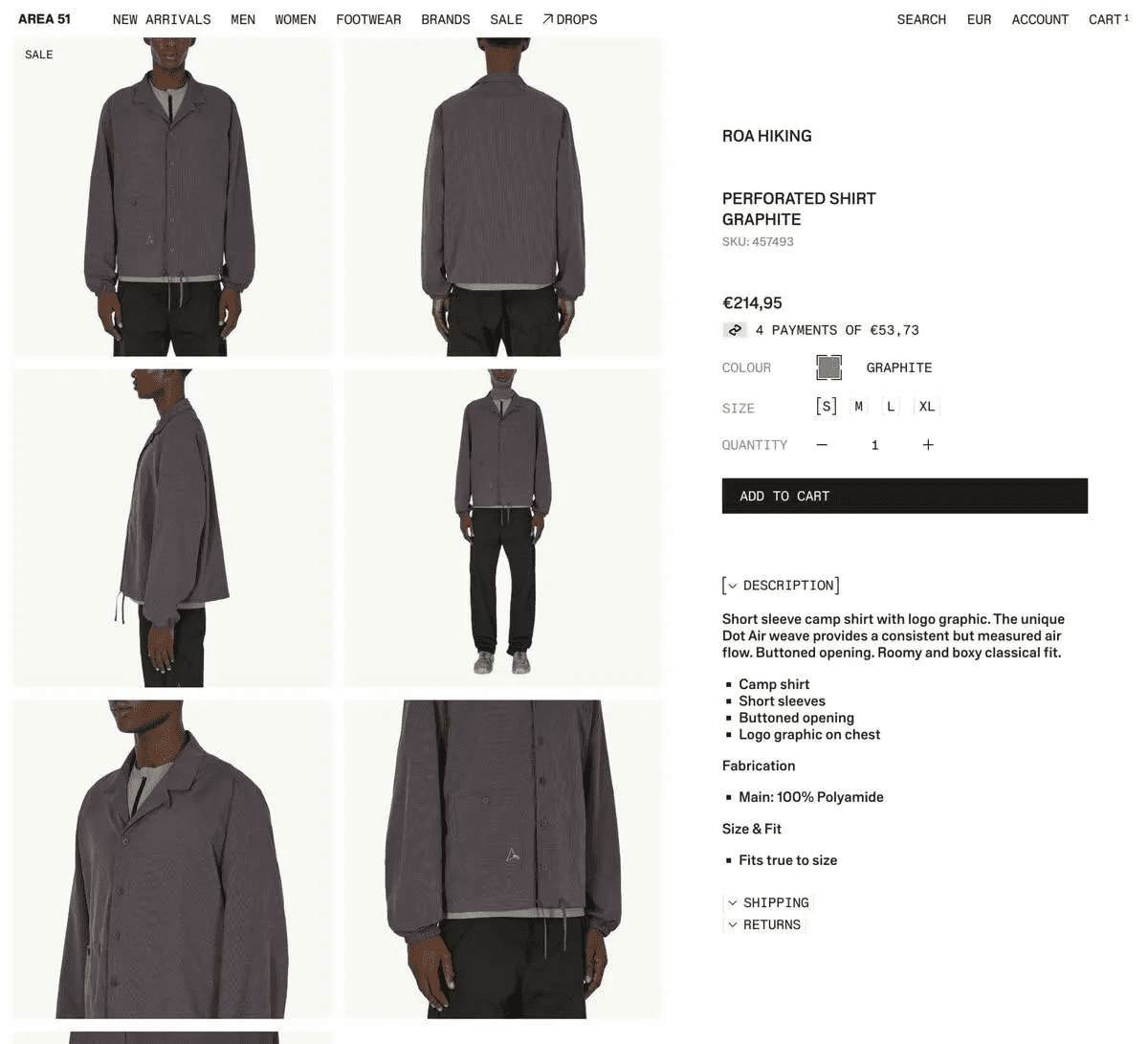
If the homepage is the hook, the product detail page is the close.
Here's the order of sections that I would have as a base layer for a fashion or jewellery product page, top to bottom:
Product images (swipeable, including one on a real human and one with scale reference).
Product title.
Star rating + review count clickable, scrolls to reviews.
Price + Afterpay/other payment strip.
Size selector with a "size guide" pop-up with images as reference
Add to cart button sticky on mobile.
Icon Info Stack free shipping, returns, secure checkout, small icons to represent each piece of info
Short product description 3 sentences max that talks about the piece itself
Photo reviews above the technical info, not below. *Technical info / fabric / care.
Similarly Recommended Products
Most stores I audit have this order roughly down but still have a new missing pieces. Reviews at the bottom. Size guide hidden in a tab. Description that's 11 paragraphs of brand storytelling before you can find out what the thing is made of. Get the basics of your wining pages down first.
Be clear before you start being fancy.
If the homepage is the hook, the product detail page is the close.
Here's the order of sections that I would have as a base layer for a fashion or jewellery product page, top to bottom:
Product images (swipeable, including one on a real human and one with scale reference).
Product title.
Star rating + review count clickable, scrolls to reviews.
Price + Afterpay/other payment strip.
Size selector with a "size guide" pop-up with images as reference
Add to cart button sticky on mobile.
Icon Info Stack free shipping, returns, secure checkout, small icons to represent each piece of info
Short product description 3 sentences max that talks about the piece itself
Photo reviews above the technical info, not below. *Technical info / fabric / care.
Similarly Recommended Products
Most stores I audit have this order roughly down but still have a new missing pieces. Reviews at the bottom. Size guide hidden in a tab. Description that's 11 paragraphs of brand storytelling before you can find out what the thing is made of. Get the basics of your wining pages down first.
Be clear before you start being fancy.
The cart drawer is your last shot
The cart drawer is your last shot
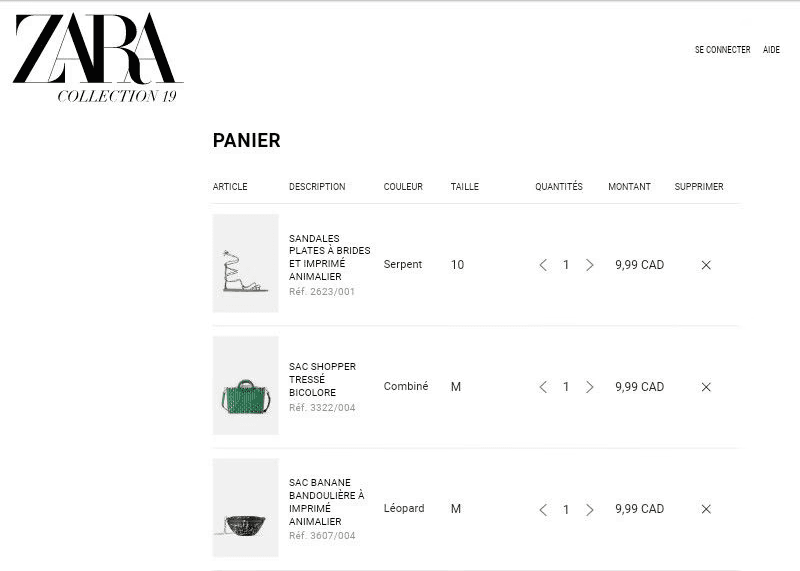
Most founders think the cart is where the customer has already decided. Wrong. The cart is where about 40% of your remaining drop-off is happening.
A lot of customers have made the tough decision to add those items to cart and now your cart is the only bottleneck between them and the checkout phase.
You worked this hard to get them here, don't lose them now because the cart drawer is doing nothing.
From what we've seen most helpful cart draws that help push customers to purchase have these:
a free shipping progress bar at the top "you're $24 away from free shipping"
A delivery time estimator that could state when the product would be arriving.
An upsell tray people who bought this also bought.
The payment options strip Afterpay, Klarna, Apple Pay, whatever's relevant.
And a checkout button that's the dominant visual element. So none of that minimalistic thin grey button.
Most founders think the cart is where the customer has already decided. Wrong. The cart is where about 40% of your remaining drop-off is happening.
A lot of customers have made the tough decision to add those items to cart and now your cart is the only bottleneck between them and the checkout phase.
You worked this hard to get them here, don't lose them now because the cart drawer is doing nothing.
From what we've seen most helpful cart draws that help push customers to purchase have these:
a free shipping progress bar at the top "you're $24 away from free shipping"
A delivery time estimator that could state when the product would be arriving.
An upsell tray people who bought this also bought.
The payment options strip Afterpay, Klarna, Apple Pay, whatever's relevant.
And a checkout button that's the dominant visual element. So none of that minimalistic thin grey button.
Speed is the unsexiest fix and the most important one
Speed is the unsexiest fix but the most important one
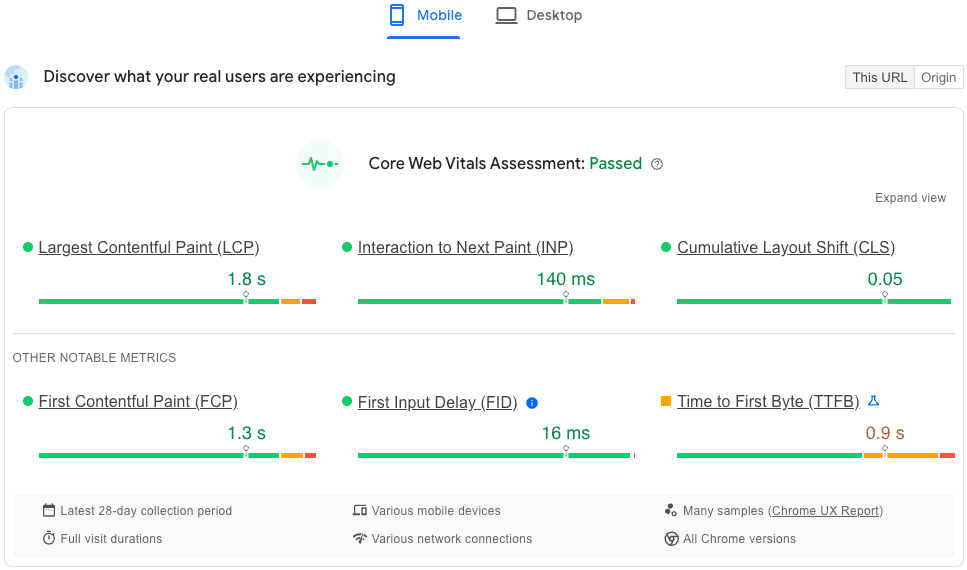
Nobody wants to hear about speed because it's boring. There are no Pinterest boards for "fast Shopify stores." There are no YouTube video pitching you on a "PageSpeed Rebrand." But here's the thing if your mobile LCP (Largest Contentful Paint which is the biggest file that needs to load on the page) is over 2.5 seconds, none of the other stuff in this document matters because half your traffic is gone before they ever see your beautiful page.
53% of mobile visitors leave if a page takes longer than 3 seconds.
A Deloitte study with Google found that improving load time by one tenth of a second lifted ecommerce conversions by 8.4%.
A tenth of a second. The math on this is so absurd that you should treat speed as the highest priority thing on your list until your mobile LCP is under 2 seconds. Period.
The biggest culprits I see on fashion stores: uncompressed images/videos and leaving unused apps running in the background. Page builder like PageFly, GemPages, Shogun, ship 40-60% more code than your theme needs and most founders never disable the parts they're not using. Third-party app sprawl every app you install adds scripts to your site, and most of them load on every page even when they shouldn't. Heavy hero videos, autoplay video on the homepage will tank your LCP unless you compress it correctly and lazy-load it.
Run your homepage through PageSpeed Insights right now. Mobile, not desktop. If you're under 2.5 seconds LCP, nice. If you're over, you have a job to do this week and it's worth more to your bottom line than any Reel you'll post.
Google has been kind enough to provide you and me with a free tool to check it right now:
Pagespeed Checker ←
Nobody wants to hear about speed because it's boring. There are no Pinterest boards for "fast Shopify stores." There are no YouTube video pitching you on a "PageSpeed Rebrand." But here's the thing if your mobile LCP (Largest Contentful Paint which is the biggest file that needs to load on the page) is over 2.5 seconds, none of the other stuff in this document matters because half your traffic is gone before they ever see your beautiful page.
53% of mobile visitors leave if a page takes longer than 3 seconds.
A Deloitte study with Google found that improving load time by one tenth of a second lifted ecommerce conversions by 8.4%.
A tenth of a second. The math on this is so absurd that you should treat speed as the highest priority thing on your list until your mobile LCP is under 2 seconds. Period.
The biggest culprits I see on fashion stores: uncompressed images/videos and leaving unused apps running in the background. Page builder like PageFly, GemPages, Shogun, ship 40-60% more code than your theme needs and most founders never disable the parts they're not using. Third-party app sprawl every app you install adds scripts to your site, and most of them load on every page even when they shouldn't. Heavy hero videos, autoplay video on the homepage will tank your LCP unless you compress it correctly and lazy-load it.
Run your homepage through PageSpeed Insights right now. Mobile, not desktop. If you're under 2.5 seconds LCP, nice. If you're over, you have a job to do this week and it's worth more to your bottom line than any Reel you'll post.
Google has been kind enough to provide you and me with a free tool to check it right now:
Pagespeed Checker ←
The mobile site is the actual site
The mobile site is the actual site
81% of fashion ecommerce transactions happen on mobile. 78% of your traffic is on a phone. And yet I'd estimate 80% of the founders I talk to are still designing their store on a 27-inch monitor and treating the mobile version as the version they "also need to make sure works."
Complete backwards.
Build the mobile version first. Make every decision on the mobile view first before implementing it. Then check that it also works on desktop. Not the other way around. The reason this matters is that mobile has constraints that force you to be ruthless about what's on the page and those same constraints are what's secretly hurting your desktop conversion too.
Some specific things that 90% of stores are getting wrong on mobile:
the Add-To-Cart button is not sticky it should be persistent at the bottom of the screen on the product page.
The image gallery doesn't swipe properly should work like Instagram, swipe between images, tap to zoom, pinch to zoom further.
The checkout has too many fields Shopify gives you the ability to hide fields you don't actually need. Hide them.
81% of fashion ecommerce transactions happen on mobile. 78% of your traffic is on a phone. And yet I'd estimate 80% of the founders I talk to are still designing their store on a 27-inch monitor and treating the mobile version as the version they "also need to make sure works."
Complete backwards.
Build the mobile version first. Make every decision on the mobile view first before implementing it. Then check that it also works on desktop. Not the other way around. The reason this matters is that mobile has constraints that force you to be ruthless about what's on the page and those same constraints are what's secretly hurting your desktop conversion too.
Some specific things that 90% of stores are getting wrong on mobile:
the Add-To-Cart button is not sticky it should be persistent at the bottom of the screen on the product page.
The image gallery doesn't swipe properly should work like Instagram, swipe between images, tap to zoom, pinch to zoom further.
The checkout has too many fields Shopify gives you the ability to hide fields you don't actually need. Hide them.
Reviews are not a nice-to-have
Reviews are necessary
I know I keep coming back to reviews. That's because the single most consistent finding across every audit I've ever done is that reviews are the highest-leverage trust signal on a fashion or jewellery store and the founders are almost always under-investing in them.
Here's what good looks like. A review widget that shows photos, lets customers filter by size, body type, or fit. Having a request email that goes out 7-14 days after the product arrives, with a discount for the next purchase as the incentive.
Adding half a percentage on $50K a month store is $3,000. Every month. Forever. From fixing reviews.
I know I keep coming back to reviews. That's because the single most consistent finding across every audit I've ever done is that reviews are the highest-leverage trust signal on a fashion or jewellery store and the founders are almost always under-investing in them.
Here's what good looks like. A review widget that shows photos, lets customers filter by size, body type, or fit. Having a request email that goes out 7-14 days after the product arrives, with a discount for the next purchase as the incentive.
Adding half a percentage on $50K a month store is $3,000. Every month. Forever. From fixing reviews.
So What Now
Okay, you made it to the end.
Genuinely impressed if you read all of that most people would have bailed at "Chapter 1." So thank you. I mean that.
So as a thank you for reading this I'll be honest with you about what this thing actually is.
You probably already figured that out. The whole point of writing 9,000 words about Shopify CRO and giving it away for free is so that some percentage of the founders who read it go "huh, this guy actually knows what he's talking about" and reach out.
That's the trade. I write something useful, you decide if I'm worth replying to. Fair enough?
But I don't want to do the agency thing where I end this with "BOOK A CALL TO 10X YOUR REVENUE" and a button that pretends it's not a sales page. So I'm going to give you three options instead and you pick the one that's actually you right now.
Okay, you made it to the end.
Genuinely impressed if you read all of that most people would have bailed at "Chapter 1." So thank you. I mean that.
So as a thank you for reading this I'll be honest with you about what this thing actually is.
You probably already figured that out. The whole point of writing 9,000 words about Shopify CRO and giving it away for free is so that some percentage of the founders who read it go "huh, this guy actually knows what he's talking about" and reach out.
That's the trade. I write something useful, you decide if I'm worth replying to. Fair enough?
But I don't want to do the agency thing where I end this with "BOOK A CALL TO 10X YOUR REVENUE" and a button that pretends it's not a sales page. So I'm going to give you three options instead and you pick the one that's actually you right now.
Option 1: You want the follow-up
Option 1: You want the follow-up
You read all this, some of it landed, you ticked off a few things on the checklist, and you want me to keep going. So if that's you drop your email below. What you'll get:
A follow-up within a week based on what you ticked off what to fix next, in what order, and roughly what each one's worth on a store your size. I read these myself.
Then every two or three weeks you'll get a new working note or a reminder saying:
"here's a teardown of a brand that just blew up on Reels and what I noticed about their product page or here's the Klaviyo flow change one of my clients made last month that bumped their email revenue 18%."
You can unsubscribe any time.
You read all this, some of it landed, you ticked off a few things on the checklist, and you want me to keep going. So if that's you drop your email below. What you'll get:
A follow-up within a week based on what you ticked off what to fix next, in what order, and roughly what each one's worth on a store your size. I read these myself.
Then every two or three weeks you'll get a new working note or a reminder saying:
"here's a teardown of a brand that just blew up on Reels and what I noticed about their product page or here's the Klaviyo flow change one of my clients made last month that bumped their email revenue 18%."
You can unsubscribe any time.
Option 2: You want the audit
Option 2: You want the audit
You read this and went "yeah, this is my store, and I don't have time to do any of it myself." That's fine, that's most of you.
I'll give you a video of your store with the 2-
3 things I'd fix in priority order, what each one's worth, and how long each one takes.
If you want us to help implement them, great! If you want to take the video and do them yourself or hand it to your dev, also great!
If you do want an audit send us a DM on insta: @vas_enterprise
Two things to know,
I only do a few of these a week so it's not instant.
I only do them for brands I think I can actually help. If you're not on Shopify or don't have as much traffic right now, I'll say that.
Option 3: You don't want anything yet
Option 3: You don't want anything yet
Cool. No pressure. Send this to a friend who runs a brand. Or save it. Or come back when one of the things in here has been bugging you for a few weeks and you want to do something about it. I'm not going anywhere.
Cool. No pressure. Send this to a friend who runs a brand. Or save it. Or come back when one of the things in here has been bugging you for a few weeks and you want to do something about it. I'm not going anywhere.
If nothing else, just open your store on your phone tonight and try to buy something. The whole rest of this document was a lead-up to that one sentence. That single act, done honestly, will tell you more about your store than any analytics dashboard. Do that and you've already gotten more out of this than 90% of people who read it.
Cool. No pressure. Send this to a friend who runs a brand. Or save it. Or come back when one of the things in here has been bugging you for a few weeks and you want to do something about it. I'm not going anywhere.
If nothing else, just open your store on your phone tonight and try to buy something. The whole rest of this document was a lead-up to that one sentence. That single act, done honestly, will tell you more about your store than any analytics dashboard. Do that and you've already gotten more out of this than 90% of people who read it.
The Fine Print
The Fine Print
Look, I'll be straight, there's no fine print. I'm not going to spam you. I'm not going to sell your email. I'm not going to add you to 14 sequences. The list goes out maybe twice a month, sometimes less. If you reply to one, I'll reply back. That's the whole deal.
If any of this resonated, the email field's right up there. If none of it did, hopefully you got something useful out of the read anyway.
Either way, go fix whatever you need to fix. You'll thank me later.
From Ryan VAS Enterprise · Brisbane, AU ryan@vasenterprise.com.au